Train Addiction Help Line: 1.866.840.7777
Nov 30, 2016 - O Scale
MTH - Premier Diesel Locomotives - O Scale 3 Rail - (Hi-Rail Wheels)
MTH - Premier Diesel Locomotives - O Scale 3 Rail - (Hi-Rail Wheels)

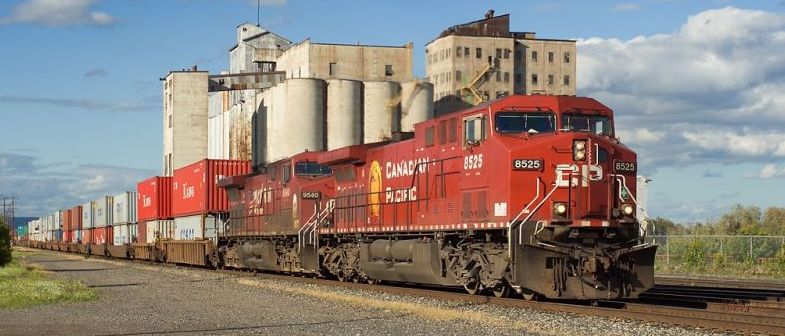
AC4400cw
From the dawn of dieselization through its first six decades, virtually every American diesel locomotive used DC traction motors. By the early 1990s, however, a series of technological advances allowed designers to tap the inherent superiority of AC traction - namely, the ability of an AC motor to start a heavier load than a DC motor, with the same prime mover. The superior adhesion of AC power touched off a new horsepower race because, with the same number of wheels, AC traction could put more horsepower on the rails.
GP38-2
Produced from 1972 to 1986, the GP38-2 helped inaugurate Electro-Motive's "Dash-2" series of locomotives and became one of EMD's all-time best sellers. With over 2200 engines sold throughout North America, rare was the railroad that did not roster these reliable, second-generation EMD workhorses.
SD45
Like the Pontiac GTO, the SD45 was a mid-60s General Motors muscle car. Stuffed under its brick-like hood was the largest diesel motor made up to that time, a turbo-charged, 20-cylinder, Electro-Motive Division model 645E. The Great Northern took delivery of the first SD45 in May of 1966 and promptly painted the nickname "Hustle Muscle" on its flanks. The name said it all: the SD45 was heavy freight power, intended for long trains and high speeds. And it had the muscular looks to match, with flared radiators capping a long body that filled every inch of its frame - as opposed to its baby brother, the SD40, which had an open "porch" at each end of the engine.
Dash-9
For the first six decades of the diesel era, the main goal of locomotive design was higher horsepower. Introduced in 1993, GE's 4400 hp Dash 9 and its AC-motored sibling, the AC4400CW, were three times as powerful as a typical first-generation diesel and had 10% more horsepower than their immediate predecessor, the Dash 8. A couple years later, GE and then EMD introduced 6000 hp engines, the first single-unit diesels to equal the power of the last and best steamers.
GP-30
In the summer of 1960, EMD's sales team got an unpleasant surprise. General Electric, which had divorced partner Alco in 1953 and was thought to be making only export diesels, had suddenly fielded an American road switcher. Worse yet, GE's upstart U25B, regarded today as the first of the second-generation diesels, was more powerful, more modern, and required less maintenance than EMD's flagship offering, the GP20. Perhaps fortunately for EMD, the railroad industry was in a slump at the time; as the designers at La Grange rushed a competitve model into production, not a single U-boat was sold that first year.
F40PH
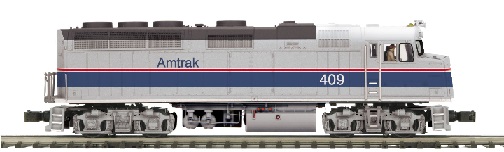
The F40PH was designed for Amtrak as a commuter and medium-haul engine, to complement its long-haul fleet of SDP40F diesels. But when the SDP40Fs fell from grace due to poor reliability, a rough ride and derailment issues, the F40PH became the backbone of Amtrak's locomotive fleet for decades.
Introduced in 1976, the F40PH was essentially a passenger version of the mid-1960s GP40 freight diesel. It shared the earlier engine's turbocharged V-16 3000 hp (later uprated to 3200 hp) model 645 motor, and added an HEP (head-end power) generator for passenger lights, heat and air conditioning. An enclosed cowl afforded en-route, all-weather access to the F40PH's engine room if necessary.
In short order, commuter railroads across the United States and Canada followed Amtrak into EMD's order books for this versatile, reliable engine. While Amtrak's fleet was bumped from service in the 2000s by new Genesis diesels, F40PHs remain in use on Via Rail Canada, owner of the largest fleet north of the border, as well as Chicago commuter operator Metra, the largest commuter rail purchaser. Daily Boston-area riders are just now saying goodbye to the MBTA's F40PH fleet, as it's replaced by new engines built by MotivePower Inc. in Boise, Idaho.
FA-2
The American Locomotive Company, one of the nation's premier steam locomotive builders, joined forces with Schenectady, New York neighbor General Electric to build the first standardized diesel-electric locomotives in the 1920s. But when the diesel revolution began in earnest after World War II, Alco seemed doomed to forever playing second fiddle to industry leader EMD.
Observers frequently point to reliability problems with Alco's 1600 hp model 244 diesel motor as the cause. But one wonders today if Alco's problem was really its motor, or EMD's commanding sales lead. During World War II, EMD had been the only company permitted to manufacture road diesels, and shop crews nationwide had learned to service the EMD 567 prime mover. Perhaps a lack of familiarity led to lesser-quality maintenance of Alco motors; as evidence, Alco fans today point to the New Haven, an all-Alco railroad that got great service from its Alco fleet while others complained.
Product Details


 © 2026 Pacific Western Rail Systems
Train Addiction Help Line: 1 866 840 7777
© 2026 Pacific Western Rail Systems
Train Addiction Help Line: 1 866 840 7777