Train Addiction Help Line: 1.866.840.7777
Aug 25, 2021 - HO Scale
PT Trains - HO Scale - Decals - Set of GHS Pictograms - Waterslide Decals


Dear HO Scale Customers;
Check out the NEW Decals from PT Trains!
Get your orders in today!
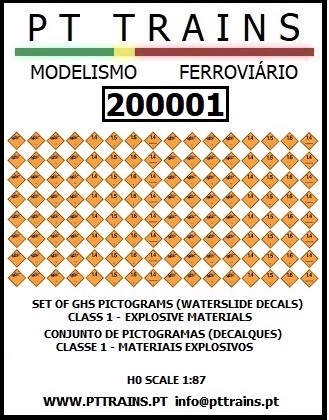
Explosive Materials (Class 1) - Class 1 items are not usually shipped by air and are divided into 6 subdivisions. They cover substances that have an explosion hazard, explosions that may project fragments and firebrands, and fire hazards.
Gases (Class 2) - This class is divided into three subdivisions that include flammable gases, toxic gases and gases that are neither flammable or toxic such as helium and oxygen.
Flammable Liquids (Class 3) - Class 3 comprises liquids or mitures of liquids that will give off flammable vapours at specific temperatures and hav a flash point of not more than 60.5 degrees Celsius / 140.9 degrees Fahrenheit.
Flammable Solids (Class 4) - Flammable solids are divided into 3 subdivisions that include highly flammable solids, solids that are likely to spontaneously and substances that, if they come into contact with water, emit flammable gases.
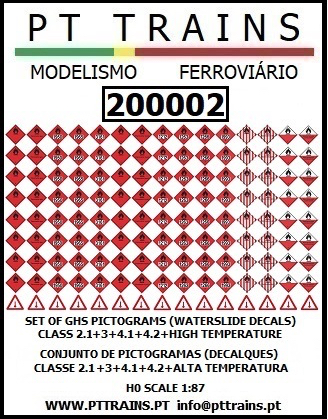
Gases (Class 2) - This class is divided into three subdivisions that include flammable gases, toxic gases and gases that are neither flammable or toxic such as helium and oxygen.
Flammable Solids (Class 4) - Flammable solids are divided into 3 subdivisions that include highly flammable solids, solids that are likely to spontaneously and substances that, if they come into contact with water, emit flammable gases.
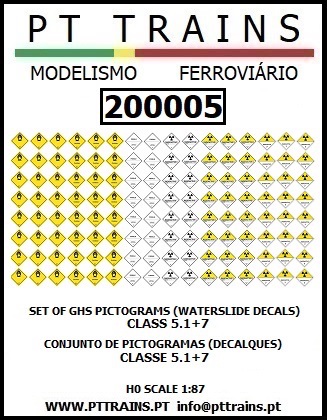
Oxidizing Substances and Organic Pesticides (Class 5) - This class is divided into two subdivisions and covers agents that react with Oxygen and organic pesticides
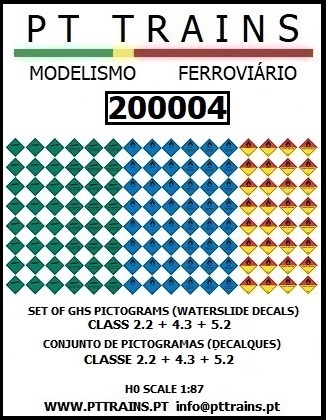
Oxidizing Substances and Organic Pesticides (Class 5) - This class is divided into two subdivisions and covers agents that react with Oxygen and organic pesticides
Radioactive Materials (Class 7) - Class 7 covers materials that have a specific activity greater than 70 kilo becquerels per kilogram.
Looking for more PT Trains Products? Click Here!

Product Details



 © 2026 Pacific Western Rail Systems
Train Addiction Help Line: 1 866 840 7777
© 2026 Pacific Western Rail Systems
Train Addiction Help Line: 1 866 840 7777