Train Addiction Help Line: 1.866.840.7777
Jan 1, 2018 - Periodical News
Battle River Railway: Shortline Railway Cooperative

Battle River Railway: Shortline Railway Cooperative
Battle River Railway is a farmer-owned shortline railway operating in central Alberta, created to preserve rail service for Prairie grain producers after Canadian National planned to abandon the line. Officially formed in 2010, the railway became one of the more recognizable examples of modern Prairie shortline operations, reflecting the continued importance of rail transportation to rural agricultural communities across Western Canada.

The railway operates over former Canadian National trackage between Camrose and Alliance, serving a number of small communities throughout east-central Alberta. Its origins trace back to the Battle River Producer Car Group, an organization established to support producer car grain loading and maintain local rail access for farmers in the region.
When CN moved toward abandoning the branch line, local stakeholders stepped in to purchase and operate the railway themselves, ensuring continued freight service for the agricultural industry.
Grain traffic remains the core of Battle River Railway’s operations. The line handles covered hoppers loaded with wheat, barley, canola, and other Prairie commodities destined for export terminals and domestic markets across Canada. By maintaining local rail service, the railway allows producers to continue loading grain closer to home, reducing reliance on trucking and helping smaller communities remain connected to the national rail network.
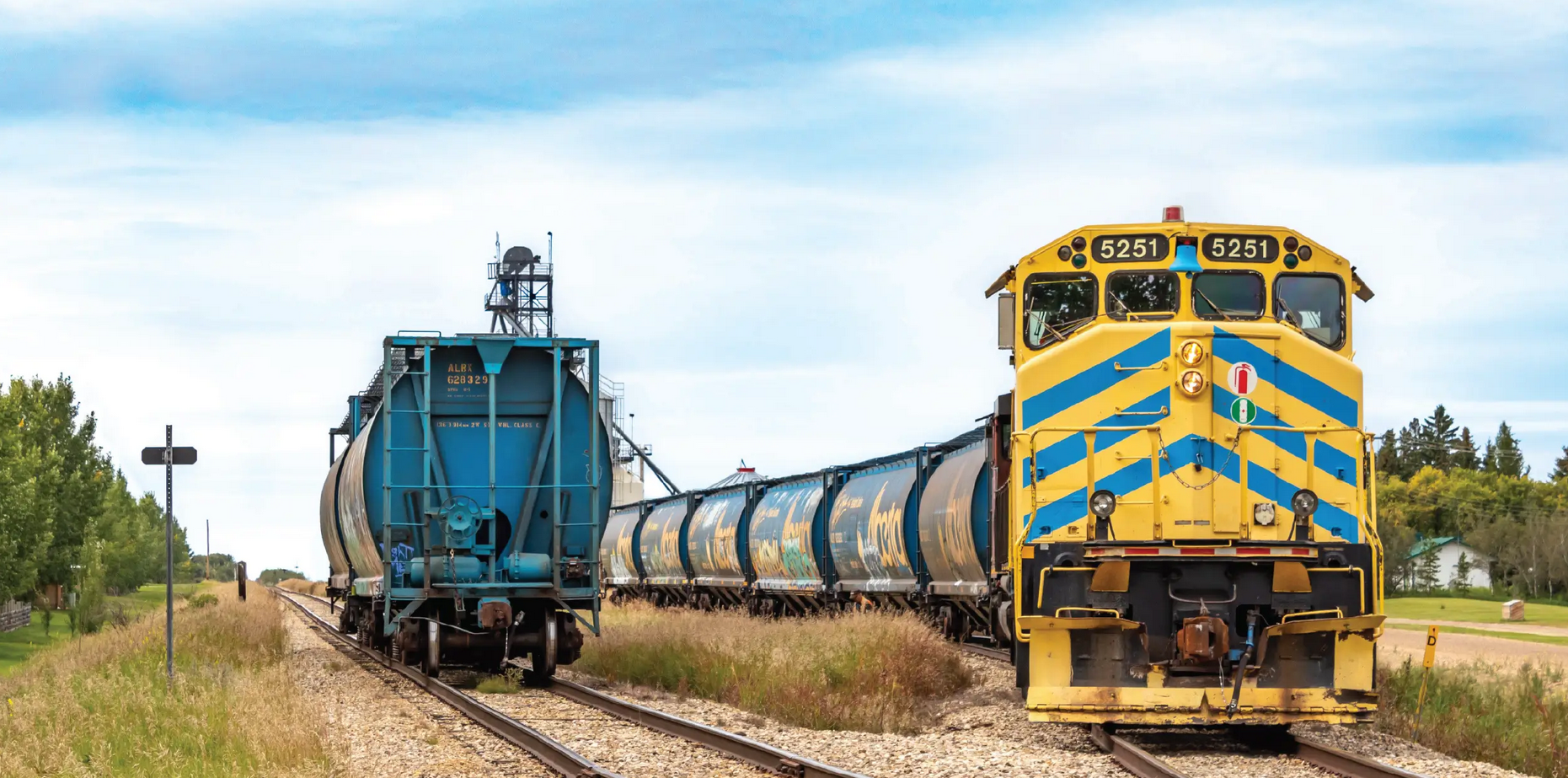
Like many Prairie shortlines, Battle River Railway operates with a practical, no-nonsense approach shaped by the realities of rural railroading. Its locomotive fleet has included rebuilt and second-hand power suited to branch line operations, often displaying the weathered appearance and patched paint schemes commonly associated with regional railways. This gives the operation a distinctly authentic Prairie character, especially compared to the larger Class I railways focused on high-density mainline traffic.
Beyond grain transportation, the railway has also diversified into railcar storage, transloading, industrial development, and excursion operations. These additional services help support the long-term sustainability of the railway while providing economic activity for the surrounding communities.
For railfans and model railroaders, Battle River Railway represents a compelling example of contemporary Canadian shortline railroading. Interchanging with both CN and CP lines, the railway has become a familiar part of Western Canadian operations over the last 10 to 15 years. Its combination of grain elevators, lightly maintained branch lines, older locomotives, and rural Prairie scenery captures a side of modern railroading still deeply tied to the agricultural roots of Alberta.
More importantly, the railway stands as an example of communities and producers working together to preserve infrastructure larger railways no longer considered viable, ensuring rail service continues to play an important role in Alberta’s agricultural economy.
For anyone modeling contemporary Prairie railroading, Battle River Railway brings a distinctive and highly recognizable operation to the layout - one that feels authentically Canadian and perfectly at home alongside modern CN and CP equipment.

For us, the modelers:
These cars can be seen on interchange service on CP and CN
North American Railcar Corp is proud to introduce the Battle River Railway (ALBX) as part of our upcoming cylindrical hopper run, scheduled for December 2026.
These hopper cars are ex- Government of Alberta Heritage Fund cars, featuring Alberta town names, and will be available in 6 roadnumbers
Like all North American Railcar Corp models, these hoppers will be prototype-accurate, rich in detail, and equipped with our free-rolling trucks.
View All Upcoming HO Scale Cylindrical Hoppers
View All Upcoming N Scale Cylindrical Hoppers
Product Details


 © 2026 Pacific Western Rail Systems
Train Addiction Help Line: 1 866 840 7777
© 2026 Pacific Western Rail Systems
Train Addiction Help Line: 1 866 840 7777